Skip to content
ImagesFree

Typographic Travel Poster for Any Location

Create a 4:5 vertical travel poster with giant central lettering that contains connected scenes and recognizable landmarks from the chosen location, rendered in a flat mid-century Swiss editorial style.

OpenAI

Source previews

These example images come from the original source. DROPIDEA has not independently tested these examples; results depend on the model and settings.
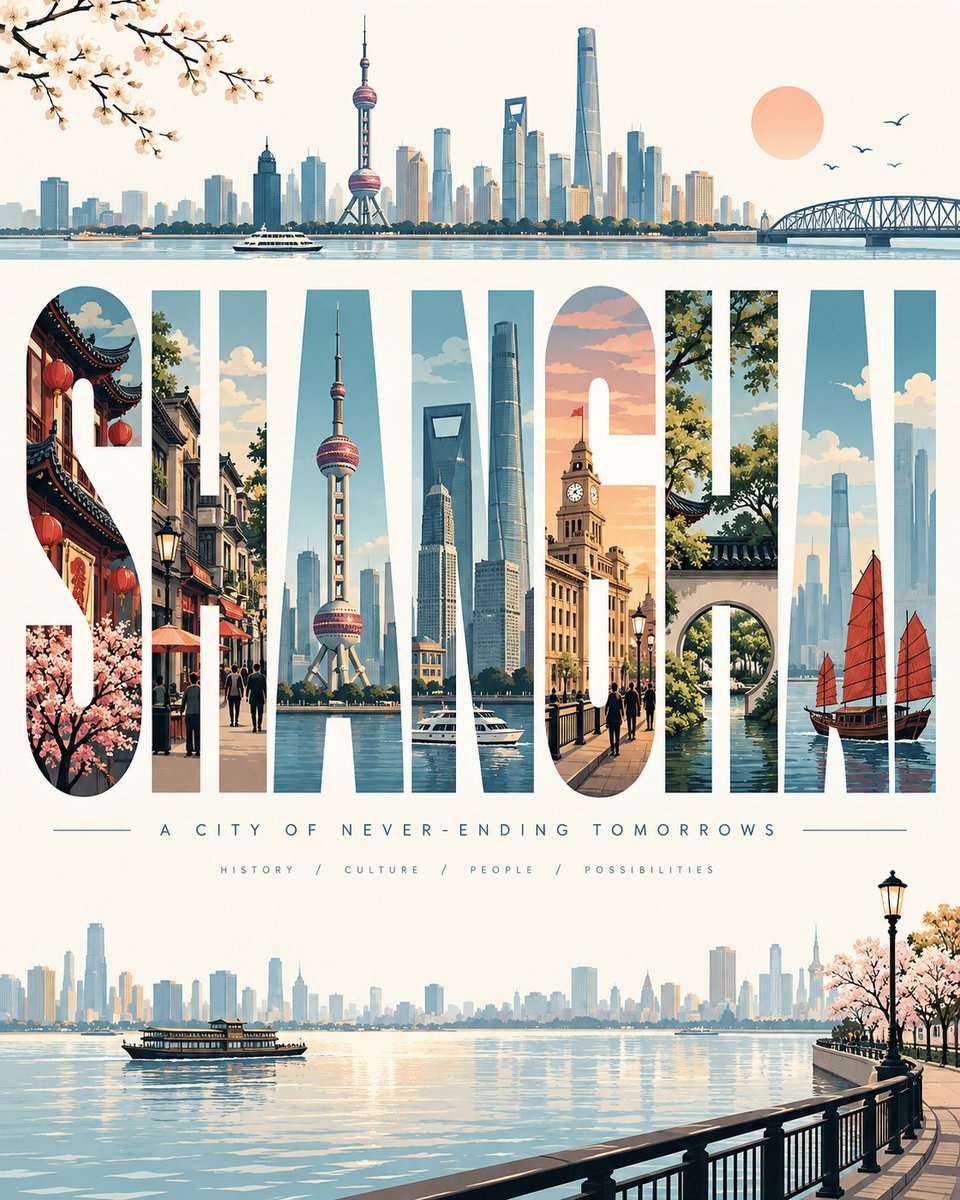
Ready to personalize

Your prompt

English

Replace the red variables with your information. Copy the full prompt and use it with your preferred agent.

TXT MD English version
Create an ultra-high-resolution 4:5 vertical travel poster themed around [LOCATION]. All visible text must be in English only, perfectly spelled and professionally typeset, with no distorted letters, random symbols, or AI gibberish. CORE DESIGN: Place the giant word “[LOCATION]” prominently in the center. Use tall, bold sans-serif letters, with each letter containing a different illustrated scene from the location. Treat the letters as “gallery windows,” incorporating recognizable landmarks, architecture, streets, transportation, nature, culture, and local atmosphere. Connect the scenes across the letters to create one cohesive visual panorama. TOP STRIP: Add a thin panoramic strip above the typography featuring simplified local elements such as skyline, roads, vehicles, trains, boats, bridges, birds, clouds, sun, or coastline where relevant. STYLE: Mid-century modern editorial poster, Swiss graphic design, premium travel branding, minimal flat-vector illustration, architectural infographic aesthetic, geometric forms, clean edges, subtle line-art details, strong negative space, and refined composition. No realism, gradients, or clutter. TYPOGRAPHY: Giant, precise, professionally designed lettering occupying most of the poster. Each letter acts as an individual illustrated frame with consistent alignment, spacing, and visual rhythm. COLOR: Automatically derive a cohesive palette inspired by [LOCATION]. Use only 4–6 muted pastel colors with elegant, low-saturation travel-poster tones. COMPOSITION: Clean white or soft ivory background, generous breathing room, balanced asymmetrical layout, and carefully integrated local landmarks, patterns, nature, transportation, architecture, and cultural details. QUALITY: Premium, calm, nostalgic, design-forward, museum-quality travel poster. 8K, print-ready, ultra-sharp vector edges, accurate typography, no spelling errors, no random characters, no distorted text, no AI artifacts.
Preview results

Your prompt

Create an ultra-high-resolution 4:5 vertical travel poster themed around [LOCATION]. All visible text must be in English only, perfectly spelled and professionally typeset, with no distorted letters, random symbols, or AI gibberish. CORE DESIGN: Place the giant word “[LOCATION]” prominently in the center. Use tall, bold sans-serif letters, with each letter containing a different illustrated scene from the location. Treat the letters as “gallery windows,” incorporating recognizable landmarks, architecture, streets, transportation, nature, culture, and local atmosphere. Connect the scenes across the letters to create one cohesive visual panorama. TOP STRIP: Add a thin panoramic strip above the typography featuring simplified local elements such as skyline, roads, vehicles, trains, boats, bridges, birds, clouds, sun, or coastline where relevant. STYLE: Mid-century modern editorial poster, Swiss graphic design, premium travel branding, minimal flat-vector illustration, architectural infographic aesthetic, geometric forms, clean edges, subtle line-art details, strong negative space, and refined composition. No realism, gradients, or clutter. TYPOGRAPHY: Giant, precise, professionally designed lettering occupying most of the poster. Each letter acts as an individual illustrated frame with consistent alignment, spacing, and visual rhythm. COLOR: Automatically derive a cohesive palette inspired by [LOCATION]. Use only 4–6 muted pastel colors with elegant, low-saturation travel-poster tones. COMPOSITION: Clean white or soft ivory background, generous breathing room, balanced asymmetrical layout, and carefully integrated local landmarks, patterns, nature, transportation, architecture, and cultural details. QUALITY: Premium, calm, nostalgic, design-forward, museum-quality travel poster. 8K, print-ready, ultra-sharp vector edges, accurate typography, no spelling errors, no random characters, no distorted text, no AI artifacts.

Variable guide

[LOCATION]

The place name that determines the central word, featured landmarks, and color palette.

Replace [LOCATION] in all three occurrences within the template.

Example value

Marrakech

What you get

  • A 4:5 vertical travel poster centered on the location name in giant lettering.
  • Connected local scenes inside the letters, including landmarks, architecture, transportation, nature, and culture.
  • A flat illustrative style inspired by mid-century modernism and Swiss graphic design.
  • A location-inspired palette of 4–6 muted, low-saturation pastel colors.
  • A clean composition with a white or soft ivory background and generous negative space.

Use cases

  • Promotional posters for cities and travel destinations.
  • Travel-inspired commemorative wall prints.
  • Campaigns for travel agencies, hotels, and local events.
  • Covers for travel guides and destination-focused editorial content.

How to use

  • Replace [LOCATION] in all three occurrences with the desired place name, keeping the spelling identical each time.
  • Use the completed prompt in an image-generation tool that supports vertical posters, and set the aspect ratio to 4:5 if the tool requires a separate setting.
  • Keep the requirement that all text visible in the poster must be in English only, even when using the Arabic version of the instructions.
  • Check the location name, letterforms, and landmarks embedded within the letters, then regenerate if distorted letters or random symbols appear.
  • Prepare the result for print while retaining 8K resolution and sharp vector edges whenever supported by the tool.

Related prompts