Skip to content
ImagesFree

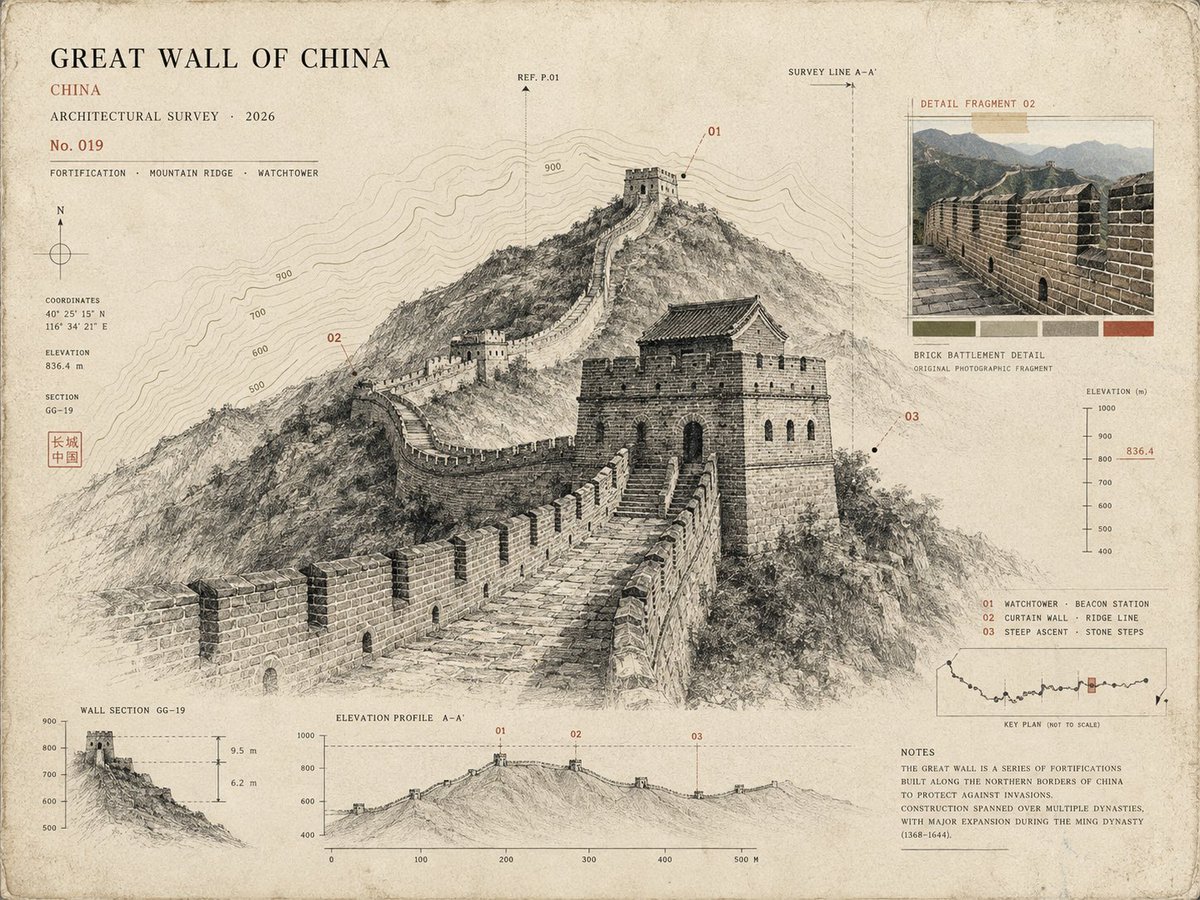
Museum-Style Architectural Specimen Card From Photo

Transforms an uploaded location photo into a 4:3 landscape architectural specimen card in museum-archive style: monochrome landmark cutout, original-color detail fragment, contour map, architectural annotations, and aged cream paper with a restrained palette.

OpenAI

Source previews

These example images come from the original source. DROPIDEA has not independently tested these examples; results depend on the model and settings.

Ready to personalize

Your prompt

English

Replace the red variables with your information. Copy the full prompt and use it with your preferred agent.

TXT MD English version
Use the uploaded photo as the primary reference. Create a sophisticated 4:3 landscape architectural specimen card inspired by museum archives, architectural surveys, and vintage scientific documentation. Keep the original location recognizable, but transform the presentation into a curated architectural study rather than a normal travel poster. * Place the main landmark as a large monochrome architectural cutout or finely detailed ink drawing. * Add a smaller original-color photographic fragment showing one distinctive detail of the location. * Include a simplified topographic contour map behind the architecture. * Add tiny numbered reference points, measurement marks, arrows, elevation lines, and architectural annotation symbols. * Use an aged cream paper background with subtle grain and imperfections. * Palette: black, warm beige, muted olive, and one restrained accent color extracted from the landmark. * Typography should be small, elegant, and archival: location name, country, year, No. 019, and 3 descriptive keywords. * Create subtle imperfections resembling screen printing, drafting ink, pencil marks, and old paper. * Keep generous negative space and a sophisticated museum-catalog aesthetic. Important: Avoid postcard layouts, circular stamps, tourist graphics, excessive text, cartoon styling, glossy effects, 3D rendering, and overly detailed illustrations. Overall mood: architectural archive × museum specimen × old survey document × contemporary editorial design.
Preview results

Your prompt

Use the uploaded photo as the primary reference. Create a sophisticated 4:3 landscape architectural specimen card inspired by museum archives, architectural surveys, and vintage scientific documentation. Keep the original location recognizable, but transform the presentation into a curated architectural study rather than a normal travel poster. * Place the main landmark as a large monochrome architectural cutout or finely detailed ink drawing. * Add a smaller original-color photographic fragment showing one distinctive detail of the location. * Include a simplified topographic contour map behind the architecture. * Add tiny numbered reference points, measurement marks, arrows, elevation lines, and architectural annotation symbols. * Use an aged cream paper background with subtle grain and imperfections. * Palette: black, warm beige, muted olive, and one restrained accent color extracted from the landmark. * Typography should be small, elegant, and archival: location name, country, year, No. 019, and 3 descriptive keywords. * Create subtle imperfections resembling screen printing, drafting ink, pencil marks, and old paper. * Keep generous negative space and a sophisticated museum-catalog aesthetic. Important: Avoid postcard layouts, circular stamps, tourist graphics, excessive text, cartoon styling, glossy effects, 3D rendering, and overly detailed illustrations. Overall mood: architectural archive × museum specimen × old survey document × contemporary editorial design.

Variable guide

the uploaded photo

The photo uploaded as the primary design reference; it should show the location or landmark clearly

First sentence of the prompt: "Use the uploaded photo as the primary reference"

Example value

A clear daytime photo of the city cathedral

No. 019

The catalog number displayed among the archival typography elements

Typography line: "location name, country, year, No. 019, and 3 descriptive keywords"

Example value

No. 042

What you get

  • A 4:3 landscape card with a sophisticated museum-catalog aesthetic
  • A large monochrome cutout or finely detailed ink drawing of the landmark
  • A small original-color detail fragment with a topographic contour map behind it
  • Numbered annotations, measurement marks, and elevation lines on aged cream paper

Use cases

  • Framed wall art and archival-style décor prints
  • Architecture and planning studio presentations
  • Elegant travel keepsakes
  • Editorial design and portfolio pieces

How to use

  • Upload a clear photo of the location or landmark you want to transform.
  • If desired, replace the catalog number No. 019 with your own number, keeping the No. format.
  • Paste the prompt into your image generation tool and attach the photo as the primary reference.
  • Review the result: the original location should remain recognizable within the museum-archive styling.
  • Regenerate with adjusted descriptive keywords or accent color if needed.

Related prompts