أنثروبيك تُطوّر وضع الصوت في كلود بنماذج أكثر قدرة
 بقلم الأدمن
خطوة أنثروبيك نحو تجربة صوتية أكثر نضجاً
في خضمّ المنافسة المتصاعدة بين شركات الذكاء الاصطناعي، أعلنت أنثروبيك عن تحديث جوهري لوضع الصوت في مساعدها الذكي كلود. يأتي هذا التحديث بعد أسابيع قليلة من إطلاق OpenAI عائلة جديدة من النماذج الحوارية وتحديث وضع الصوت في ChatGPT، مما يُشير إلى سباق تقني محتدم في مجال التفاعل الصوتي مع الذكاء الاصطناعي.
من Haiku إلى Opus: خيارات أوسع للمستخدمين
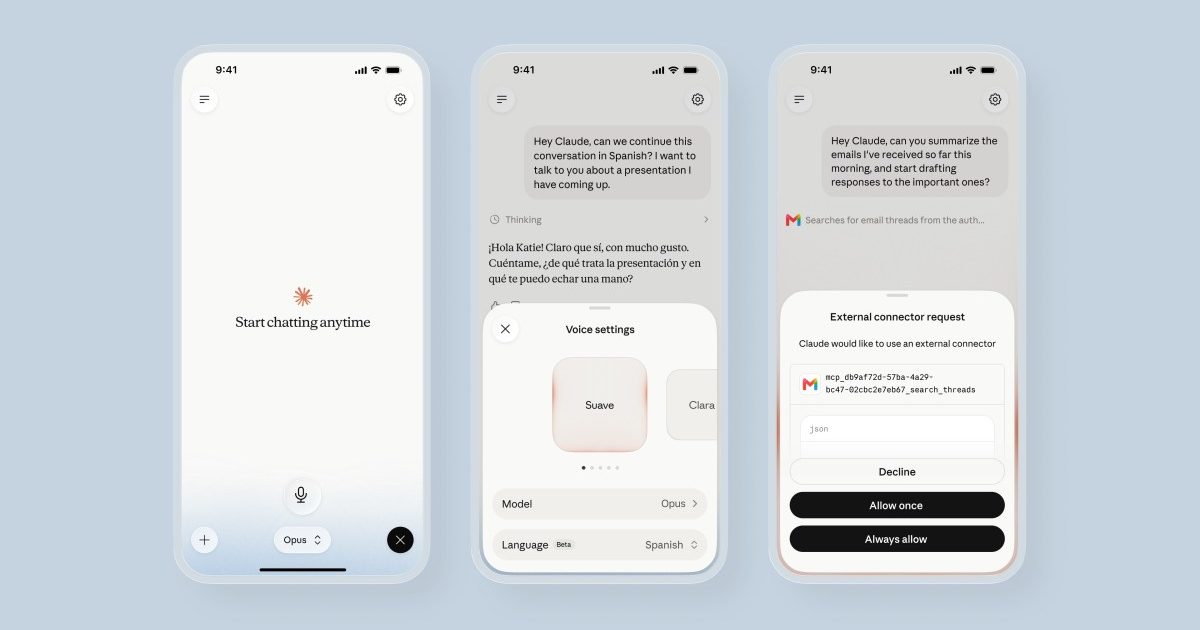
كان وضع الصوت في كلود منذ إطلاقه العام الماضي يعتمد حصرياً على نموذج Haiku، الذي يتميّز بسرعة الاستجابة لكنه يقصر أمام المهام المعقدة. الآن، بات بإمكان المستخدمين الاختيار بين ثلاثة نماذج:
- Haiku: للاستجابات السريعة والمحادثات الخفيفة.
- Sonnet: لتوازن مثالي بين السرعة والقدرة التحليلية.
- Opus: للمهام الأكثر تعقيداً التي تتطلب عمقاً في المعالجة.
والأذكى في هذا التحديث أن كلود يتذكّر آخر نموذج استخدمه المستخدم في المحادثة النصية، ويُفعّل نسخته الأسرع تلقائياً عند التبديل إلى الوضع الصوتي، مما يضمن تجربة سلسة دون الحاجة إلى إعدادات يدوية في كل مرة.
محادثات أطول وتكامل مع تطبيقات العمل
لا يقتصر التحديث على تغيير النماذج، بل يمتد إلى توسيع نطاق استخدام الوضع الصوتي ليشمل سيناريوهات عملية أكثر تعقيداً. يستطيع المستخدمون الآن الاستفادة من كلود في:
- الحصول على تغذية راجعة حول أسلوب التواصل والخطاب.
- التدرّب على تقديم عروض للعملاء بصوت عالٍ.
- العصف الذهني حول أبحاث السوق وتطوير المنتجات.
والأكثر لفتاً للنظر هو قدرة كلود على التفاعل مع تطبيقات خارجية بارزة مثل Gmail وGoogle Calendar وSlack وCanva وNotion. يعني ذلك أن المستخدم يستطيع صوتياً أن يطلب من كلود تعديل موعد في التقويم، أو صياغة رسالة إلكترونية، أو إنشاء مستند جديد في Notion، مما يُحوّل المساعد الصوتي من أداة حوار إلى شريك إنتاجية حقيقي.
وهذه النقطة تحديداً تُمثّل تمايزاً واضحاً عن OpenAI، إذ لا يزال وضع الصوت في ChatGPT عاجزاً عن استخدام الأدوات الخارجية لإنجاز المهام، رغم التحسينات الأسلوبية التي أُدخلت عليه مؤخراً.
دعم متعدد اللغات بنكهة عالمية
في وقت سابق من هذا العام، أضافت أنثروبيك دعماً متعدد اللغات لوضع الصوت في مرحلة تجريبية. وبموجب التحديث الحالي، أصبح بمقدور المستخدمين التحدّث بعشر لغات، وإن كان الاختيار يتطلب تحديداً يدوياً في الوقت الراهن. اللغات المدعومة هي:
- الإنجليزية، الفرنسية، الألمانية، الهندية، الإندونيسية.
- الإيطالية، اليابانية، الكورية، البرتغالية (البرازيلية).
- الإسبانية (أمريكا اللاتينية وإسبانيا).
توفّر التحديث وقيوده
أصبح وضع الصوت المُحدَّث متاحاً لجميع المستخدمين في مرحلة تجريبية عبر مختلف المنصات. غير أن المستخدمين في الخطة المجانية يواجهون قيدين: الأول يحصرهم بنموذج Haiku فحسب، والثاني يُقيّد تكاملهم بتطبيق خارجي واحد فقط.
وتجدر الإشارة إلى أن أنثروبيك لم تُجرِ أي تعديلات على النموذج الصوتي الأساسي، ولم تكشف عن تفاصيل البنية التقنية لمنظومتها الصوتية. ما يعني أن المستخدمين لن يلاحظوا على الأرجح تحسينات في جودة التفاعل الحواري ذاته، كمعالجة المقاطعات أو طبيعة الصوت، وهو ما يبقى ميزةً نسبية لمنافسها OpenAI في الوقت الراهن.
خلاصة: منافسة تصبّ في مصلحة المستخدم
يُجسّد هذا التحديث توجّهاً واضحاً لدى أنثروبيك نحو تحويل كلود من مجرد نموذج نصي إلى مساعد صوتي متكامل قادر على الاندماج في سير العمل اليومي. وبينما تتصاعد المنافسة مع OpenAI وغيرها، يبدو أن المستفيد الأكبر هو المستخدم النهائي الذي يجد بين يديه أدوات ذكاء اصطناعي أكثر قدرة وتنوعاً يوماً بعد يوم.
✦ بقلم فريق دروب أيديا
دروب أيديا - DROPIDEA
نأمل أن تكون هذه المقالة قد أضافت لك قيمة حقيقية. في دروب أيديا نسعى دائمًا لتقديم محتوى عربي عالي الجودة يساعدك على النمو والتطور في المجال الرقمي. تابعنا للمزيد من المقالات والشروحات المفيدة.
الوسوم
الأدمن
DROPIDEA
أحدث المقالات

بنتلي تورقال: سيارة كهربائية فاخرة بصوت محرك V8 مُصطنع

لماذا يرتفع سعر هاتفك؟ أزمة الذاكرة تهزّ صناعة التقنية
سوني تعيد إحياء سماعاتها الأسطورية XM4 بنسخة محدّثة

طائرة شحن تابعة لأمازون تخرج عن مدرج مطار ميامي وتصطدم بمركبات