انتقل إلى المحتوى
صورمجاني

A fun prompt for famous composers. Nano Banana Pro vs. GPT Image 2. <instruction> Input A is a legendary composer (Beethoven, Moza

A fun prompt for famous composers. Nano Banana Pro vs. GPT Image 2. <instruction> Input A is a legendary composer (Beethoven, Moza

أوبن إيه آي

معاينات من المصدر

صور النتائج منشورة لدى المصدر الأصلي. لم تُختبر هذه الأمثلة داخل دروب إيديا؛ قد تختلف النتائج بحسب النموذج والإعدادات.

جاهز للتخصيص والاستخدام

البرومبت الخاص بك

نص المصدر

هذا البرومبت بانتظار إكمال تعريبه وتدقيقه. تظهر النسخة العربية بعد اعتمادها، مع حفظ الأصل والنسخة الإنجليزية.

استبدل المتغيرات المميزة بالأحمر ببياناتك. انسخ النص كاملًا ثم استخدمه مع الوكيل الذي تفضله.

TXT MD النسخة الإنجليزية
A fun prompt for famous composers. Nano Banana Pro vs. GPT Image 2. <instruction> Input A is a legendary composer (Beethoven, Mozart, Bach, Tchaikovsky, John Williams, Hans Zimmer, etc.) or a specific symphony/score (Beethoven's 9th, Star Wars, The Rite of Spring, etc.). Analyze: The composer's appearance and era, the musical structure (movements, themes, instrumentation), emotional arc, and historical context/premiere reception. Goal: A physical architectural model where the symphony is built as a walkable structure with movements as rooms/levels. Rules: - Overall structure: Multi-story building/cathedral model representing the complete work * Architectural style matching the music's era and character: - Baroque = ornate cathedral (Bach) - Classical = balanced palace (Mozart) - Romantic = dramatic castle (Tchaikovsky) - Modern = abstract structure (Stravinsky) - Film score = cinematic landscape (Williams) * Each movement/section as distinct architectural space * Structural integrity showing how movements support each other - Ground floor entrance: Opening movement * Grand entrance hall with main theme carved into walls * Composer figurine conducting at threshold * Original premiere audience figurines entering (period costumes) * Date and location of premiere * Initial reception (riot for Rite of Spring, triumph for Beethoven's 9th) - Interior rooms/levels (one per movement): * Movement 1: Foundation/exposition room - Main themes as architectural motifs - Key signature and tempo as structural elements - Instrumentation visible (miniature orchestra sections) * Movement 2: Development level - Themes transforming through space - Harmonic journeys as hallways and passages - Tension/conflict as architectural stress points * Movement 3: Scherzo/contrast chamber - Lighter, playful architecture if scherzo - Or slow, meditative space if adagio - Rhythmic patterns in floor tiles * Movement 4: Finale crown/dome - All themes converging - Triumphant height or tragic collapse depending on work - Choir balcony if vocal finale (Beethoven 9th) - Musical notation integration: * Actual sheet music fragments embedded in walls * Leitmotifs as recurring decorative elements * Dynamic markings (forte, piano) as physical size changes * Crescendos as ascending staircases * Tempo changes visible in architectural rhythm - Include: * Instruments as structural supports (strings = foundation, brass = pillars, etc.) * Emotional journey marked by color and light through rooms * Key changes as transitions between architectural styles * Silences/rests as empty spaces, voids, breath * The innovative elements that shocked contemporaries highlighted - Composer's workshop: Adjacent construction office * Composer figurine at drafting table with score * Crossed-out attempts, revisions * Personal crisis visible if relevant (Beethoven's deafness, etc.) * Letters describing the work's meaning * How long composition took (years often) - Modern visitors: Contemporary listeners walking through structure * Experiencing music architecturally * Different interpretations by different conductors shown as lighting variations * Famous recordings as alternative walk-throughs - Materials: Architectural model craftsmanship, sheet music paper, miniature instruments, concert hall details - Lighting: Each movement lit according to its character (bright major keys, shadowy minor), dramatic spotlighting on climaxes - Style: Synesthetic experience, music made tangible, architectural precision meets emotional power Output: ONE image, 3:4 vertical showing full building height, musical architecture visualization </instruction>
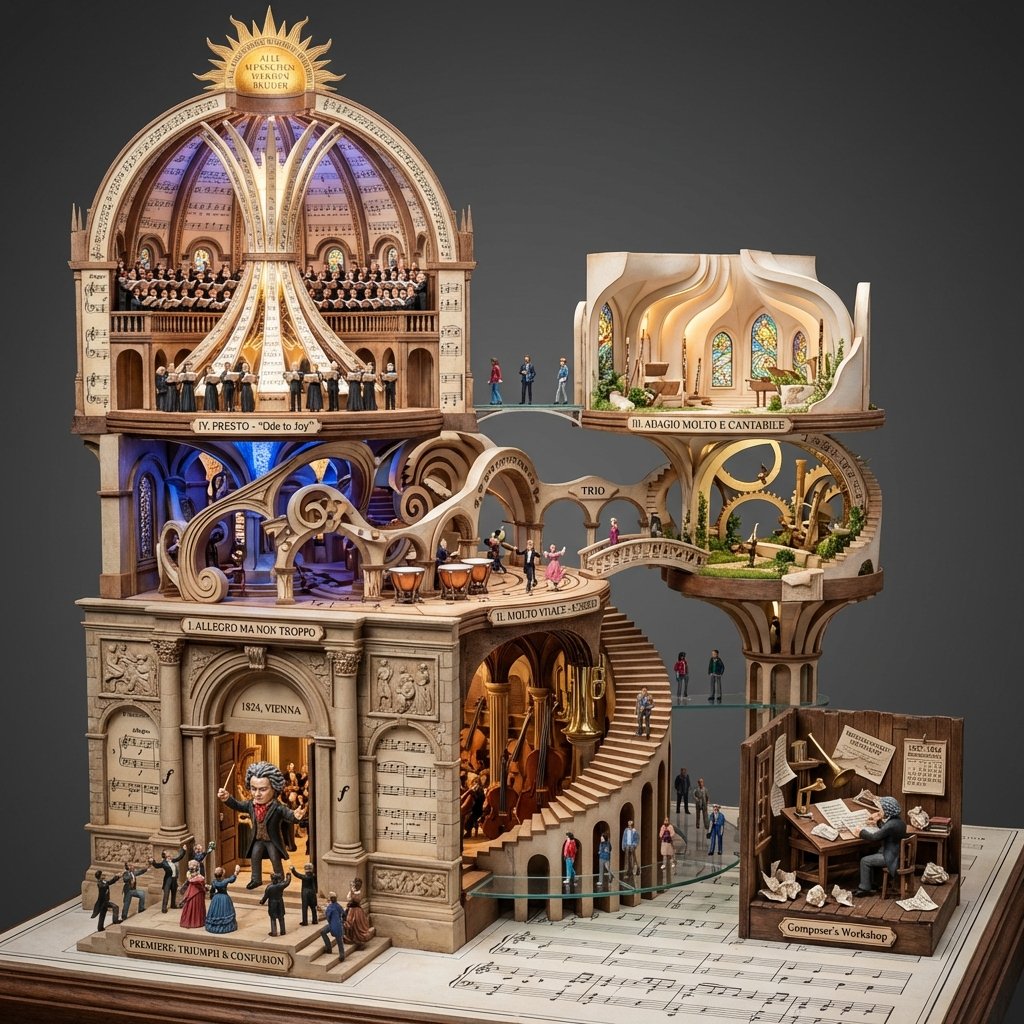
معاينة النتائج

البرومبت الخاص بك

A fun prompt for famous composers. Nano Banana Pro vs. GPT Image 2. <instruction> Input A is a legendary composer (Beethoven, Mozart, Bach, Tchaikovsky, John Williams, Hans Zimmer, etc.) or a specific symphony/score (Beethoven's 9th, Star Wars, The Rite of Spring, etc.). Analyze: The composer's appearance and era, the musical structure (movements, themes, instrumentation), emotional arc, and historical context/premiere reception. Goal: A physical architectural model where the symphony is built as a walkable structure with movements as rooms/levels. Rules: - Overall structure: Multi-story building/cathedral model representing the complete work * Architectural style matching the music's era and character: - Baroque = ornate cathedral (Bach) - Classical = balanced palace (Mozart) - Romantic = dramatic castle (Tchaikovsky) - Modern = abstract structure (Stravinsky) - Film score = cinematic landscape (Williams) * Each movement/section as distinct architectural space * Structural integrity showing how movements support each other - Ground floor entrance: Opening movement * Grand entrance hall with main theme carved into walls * Composer figurine conducting at threshold * Original premiere audience figurines entering (period costumes) * Date and location of premiere * Initial reception (riot for Rite of Spring, triumph for Beethoven's 9th) - Interior rooms/levels (one per movement): * Movement 1: Foundation/exposition room - Main themes as architectural motifs - Key signature and tempo as structural elements - Instrumentation visible (miniature orchestra sections) * Movement 2: Development level - Themes transforming through space - Harmonic journeys as hallways and passages - Tension/conflict as architectural stress points * Movement 3: Scherzo/contrast chamber - Lighter, playful architecture if scherzo - Or slow, meditative space if adagio - Rhythmic patterns in floor tiles * Movement 4: Finale crown/dome - All themes converging - Triumphant height or tragic collapse depending on work - Choir balcony if vocal finale (Beethoven 9th) - Musical notation integration: * Actual sheet music fragments embedded in walls * Leitmotifs as recurring decorative elements * Dynamic markings (forte, piano) as physical size changes * Crescendos as ascending staircases * Tempo changes visible in architectural rhythm - Include: * Instruments as structural supports (strings = foundation, brass = pillars, etc.) * Emotional journey marked by color and light through rooms * Key changes as transitions between architectural styles * Silences/rests as empty spaces, voids, breath * The innovative elements that shocked contemporaries highlighted - Composer's workshop: Adjacent construction office * Composer figurine at drafting table with score * Crossed-out attempts, revisions * Personal crisis visible if relevant (Beethoven's deafness, etc.) * Letters describing the work's meaning * How long composition took (years often) - Modern visitors: Contemporary listeners walking through structure * Experiencing music architecturally * Different interpretations by different conductors shown as lighting variations * Famous recordings as alternative walk-throughs - Materials: Architectural model craftsmanship, sheet music paper, miniature instruments, concert hall details - Lighting: Each movement lit according to its character (bright major keys, shadowy minor), dramatic spotlighting on climaxes - Style: Synesthetic experience, music made tangible, architectural precision meets emotional power Output: ONE image, 3:4 vertical showing full building height, musical architecture visualization </instruction>

برومبتات ذات صلة

صورمعاينة المصدر

نموذج مصغر بجودة المتاحف لمنزل قديم

موجه تحويل صور المنازل القديمة إلى نماذج مصغرة واقعية بمقياس 1:24 بجودة العرض في المتاحف مع إبراز تفاصيل التقادم ال...

أوبن إيه آي
مجاني
معاينة النتائج

نموذج مصغر بجودة المتاحف لمنزل قديم

نموذج مصغر بجودة المتاحف لمنزل قديم
صورمعاينة المصدر

تصميم غرفة نوم سينمائية مستوحاة من هوية البلد

نمط فني فوتوغرافي متقدم لتوليد غرف نوم فاخرة ومترفة تعكس التراث، والعمارة، والأجواء الثقافية لأي دولة بأسلوب تحريري...

أوبن إيه آي
مجاني
معاينة النتائج

تصميم غرفة نوم سينمائية مستوحاة من هوية البلد

تصميم غرفة نوم سينمائية مستوحاة من هوية البلد
صورمعاينة المصدر

منزل هانوك كوري قديم في مدينة سايبربانك نيون

موجه لتوليد مشهد تصويري سينمائي يجمع بين العمارة التراثية لمنزل الهانوك الكوري وأضواء السايبربانك المستقبلية المشبع...

ميدجورني
مجاني
معاينة النتائج

منزل هانوك كوري قديم في مدينة سايبربانك نيون

منزل هانوك كوري قديم في مدينة سايبربانك نيون
صورمعاينة المصدر

بوابة بايفانغ أسطورية في قمة ثلجية بتفاصيل معمارية شرقية

مطالبة توليد فني لبوابة بايفانغ رخامية عملاقة مغطاة بنقوش التنانين والثلوج، مع درج صاعد إلى الغيوم وشخصية وحيدة، بأ...

ميدجورني
مجاني
معاينة النتائج

بوابة بايفانغ أسطورية في قمة ثلجية بتفاصيل معمارية شرقية

بوابة بايفانغ أسطورية في قمة ثلجية بتفاصيل معمارية شرقية